
Men’s Alpine Racing: Certainties Under Scrutiny
One month before the traditional season opener on the Rettenbach glacier, men’s alpine skiing presents a striking paradox
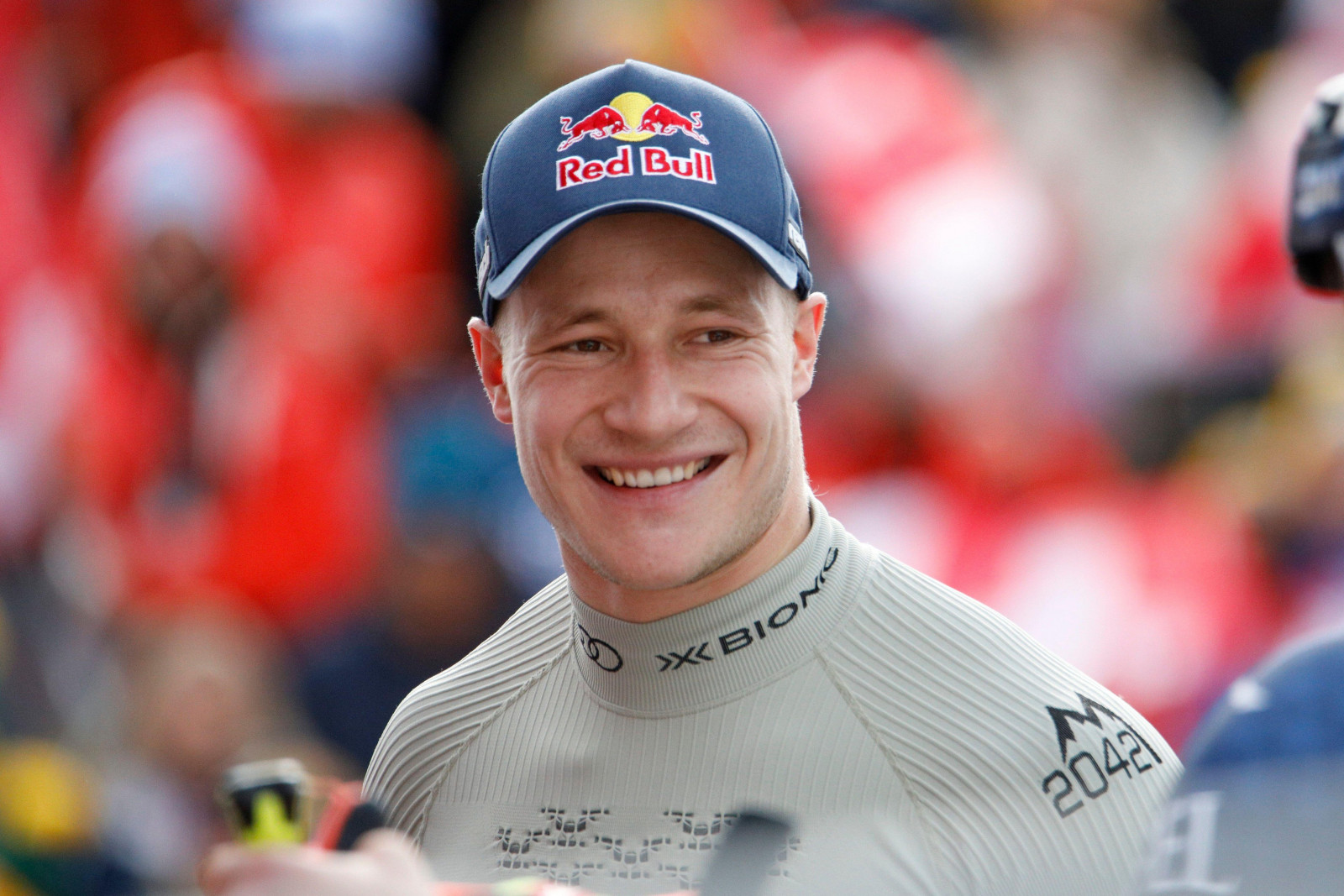
One month before the traditional season opener on the Rettenbach glacier, men’s alpine skiing presents a striking paradox. On one hand, Swiss dominance embodied by Marco Odermatt, who has defied the laws of consistency for four seasons. On the other, a landscape disrupted by absences and uncertainties, creating unprecedented opportunities in a sport renowned for its immutable hierarchies.
## The Odermatt Machine Faces Norwegian Void
Marco Odermatt approaches the 2025-2026 season with the particular status of the man to beat, riding high on his fourth consecutive overall title. The 27-year-old Swiss has transformed modern alpine skiing through his versatility, dominating giant slalom with surgical regularity while establishing himself as a super-G benchmark. This hegemony nevertheless raises a nagging question: who can still challenge him?
Aleksander Kilde’s scheduled absence deprives the circuit of its natural antagonist in speed events. The Norwegian, forced to withdraw for the entire season following complications from his Wengen injury, leaves a gaping void in speed disciplines. This defection reshuffles the cards in a sector where Norway counted on its spearhead to counterbalance Swiss influence.
Henrik Kristoffersen remains Odermatt’s primary challenger, particularly in slalom where his crystalline technique continues to set the standard. The 30-year-old Norwegian embodies this intermediate generation, experienced enough to resist attacks from the new wave while retaining the explosiveness needed to trouble the Swiss master.
## Disciplines Under Watch
In giant slalom, Odermatt reigns with authority that borders on monotony for spectacle, but commands admiration for technical perfection. Competition organizes around a few die-hards: Kristoffersen, capable of stunning performances, Austria’s Manuel Feller, ever ready to ignite his home crowd, and the young guard led by Alexander Steen Olsen, Norway’s breakout star from last season.
Slalom offers more open terrain. While Kristoffersen retains his legitimacy as the boss, emerging European talent maintains uncertainty. The pure technical discipline better resists performance standardization, preserving that element of unpredictability that provides the salt in tight gates.
Speed disciplines traverse unprecedented turbulent territory. Kilde’s absence opens a boulevard for contenders but also reveals the current field’s relative weakness. The Swiss count on their collective to compensate for Beat Feuz’s departure, while Austria hopes to rediscover its fundamentals in events where it long dictated terms.
## Nations in Transition
Switzerland enters this season with measured confidence. Beyond Odermatt, the federation can count on a golden generation that has successfully combined methodical training with performance culture. This squad depth constitutes a decisive asset in the Nations Cup race.
Austria experiences a delicate transition period. Deprived of its speed tutors, it banks on generational renewal whose contours remain blurred. Manuel Feller carries a significant portion of Alpine hopes—a situation both stimulating and perilous for an athlete accustomed to playing supporting roles.
France navigates the murky waters of the in-between. Without Alexis Pinturault, diminished by injuries, the French team seeks new equilibrium. French youth shows encouraging signals without guaranteeing immediate revolution.
## Milano Cortina 2026’s Olympic Shadow
This season takes on particular dimension with the Milano Cortina Winter Olympics scheduled for February 6-22, 2026. Men’s events will unfold at Bormio on the legendary Stelvio slope, the alpine speed temple renowned for its formidable technicality.
The Stelvio, stretching 3,230 meters with 987 meters of vertical drop and a maximum gradient of 63%, represents one of the world circuit’s most demanding challenges. The San Pietro jump passage, cleared at over 40 meters with landings exceeding 140 km/h, will separate contenders from also-rans.
This Olympic deadline subtly modifies preparation strategies. Odermatt, already a multiple Olympic medalist, approaches this season with the absolute favorite’s pressure on his Alpine home turf. For Kristoffersen, it’s perhaps the final window to capture the Olympic gold that has eluded him since PyeongChang 2018. As for outsiders, they know a season can pivot on a few weeks of perfect form at the right moment.
Kilde’s absence deprives Norway of its primary speed asset, the premier discipline at Bormio. This defection opens a boulevard for contenders in events where hierarchies can shatter based on adaptation to the mythical Lombard slope.
## Stakes of a Pivotal Season
The 2025-2026 season promises to serve as a full-scale laboratory. Can Odermatt’s dominance endure against public fatigue and emerging new challenges? The 37 scheduled events offer sufficient occasions for the unexpected to emerge, even if recent history argues for a certain predictability.
Kilde’s absence transforms speed disciplines into experimental terrain. Established hierarchies shatter, creating opportunities for outsiders who no longer dared believe. This role redistribution could revitalize events threatened by performance uniformity.
## Sölden Appointment
The Rettenbach glacier will provide the first clues to these new dynamics. If Odermatt confirms his usual supremacy there, the message will be clear: the 2025-2026 season will resemble its predecessors. But alpine skiing retains this capacity to surprise, even when everything seems predetermined.
The Lillehammer finals in March 2026 will tell whether this season fulfilled its renewal promises or once again consecrated the implacable logic of established certainties. Between these extremes, the men’s field seeks its new face.