
Eighty-three races, two new venues and World Championships in Valais: the 2027 season has taken shape. Before Sölden, a full review of what last winter left behind, a calendar that crosses the Atlantic twice, the names who will no longer be on the start list and what is at stake.
What the 2026 season left behind
At the top, little seemed to change. Marco Odermatt wrapped up his fifth overall title in Courchevel in mid-March, drawing level with Marc Girardelli, and collected the downhill and super-G globes along the way. Only the giant slalom slipped away: out in the first run in Hafjell, he left the globe to Lucas Pinheiro Braathen, who won that day and had taken Olympic gold in the discipline a few weeks earlier.
On the women’s side, Mikaela Shiffrin claimed a sixth overall title to draw level with Annemarie Moser-Pröll, after a tighter finish than expected. Emma Aicher, 22, could still have overtaken her going into the final giant slalom; the American eventually prevailed by 87 points. Shiffrin also extended her record to 110 World Cup wins and took her ninth slalom globe.
The most improbable story of the winter, though, belongs to Laura Pirovano. No podium in eight World Cup seasons, then three straight downhill wins, two of them in Val di Fassa by a hundredth of a second each: the Italian took the discipline globe in Kvitfjell. Sofia Goggia (super-G), Julia Scheib (giant slalom) and Atle Lie McGrath (men’s slalom) complete the picture.
In between, the Milan-Cortina Games crowned Franjo von Allmen a triple gold medallist (downhill, super-G, team combined). They also saw Federica Brignone win super-G and giant slalom gold on home snow, Breezy Johnson take the women’s downhill, and Shiffrin claim the slalom by 1.50 seconds.
The calendar at the heart of the winter
 © Krzysztof Nahlik Alamy
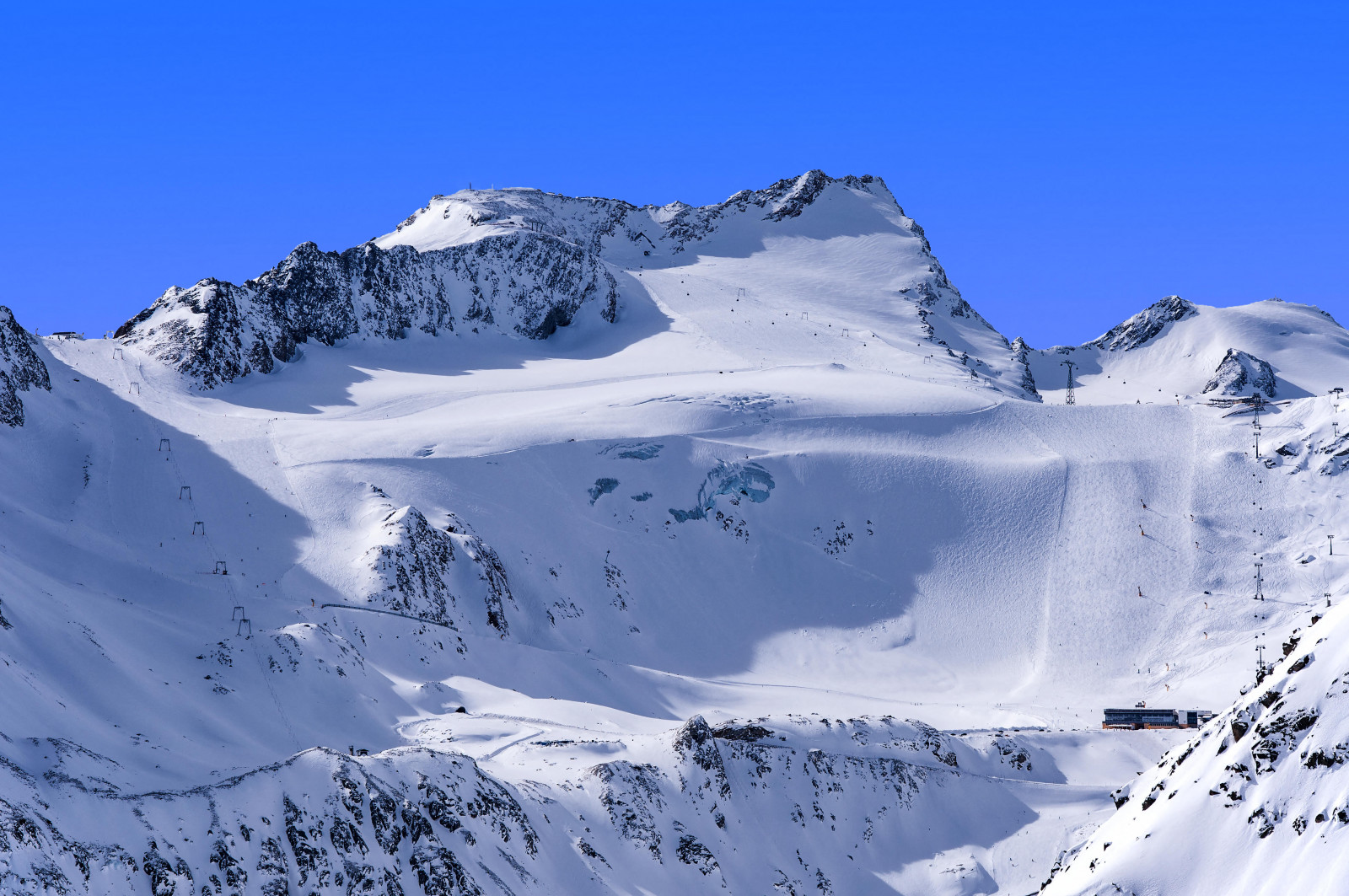
FIS lists 43 men’s races at 21 venues and 40 women’s races at 20 resorts, and promises a better balance between speed and technical events, a matter of fairness in the race for the overall title. The opening ritual is unchanged: giant slaloms in Sölden on 24–25 October, then slaloms in Levi (14–15 November) and Gurgl (21–22 November).
A quarter of the season in North America
Twenty-one of the 83 races will be held across the Atlantic: 19 in the United States and two in Canada. The men go from Copper Mountain (28–29 November) to Beaver Creek (3–6 December). The women return to Killington, a home race of sorts for Mikaela Shiffrin, who went to school at Burke Mountain Academy in Vermont. The venue was absent last season while the Superstar lift was replaced. The women then stop in Tremblant before tackling the Birds of Prey (11–13 December). They had raced there only once before, in 2024, when Cornelia Hütter won the downhill and Sofia Goggia the super-G.
December: floodlights and a return to Bormio
Back in Europe, the men stop in Val d’Isère (12–13 December), which hosts only the men’s tour this season, then in Val Gardena. The women race two super-Gs and a giant slalom in St. Moritz (18–20 December). Just before Christmas, Alta Badia stages its first night slalom under floodlights installed for the Games. Courchevel follows for the women (22 December) and Madonna di Campiglio for the men (23 December). Between the holidays, Bormio returns to the Stelvio with a downhill (28 December) and a super-G (29 December). The course, which hosted the men’s Olympic races in February, rarely hands out gifts.
Meanwhile, Upper Austria makes its entrance. Gosau, beneath the Dachstein on the edge of the Salzkammergut, hosts its first races on the Hornspitz on 28–29 December. Women had not raced in the region since 1992.
January: the classics
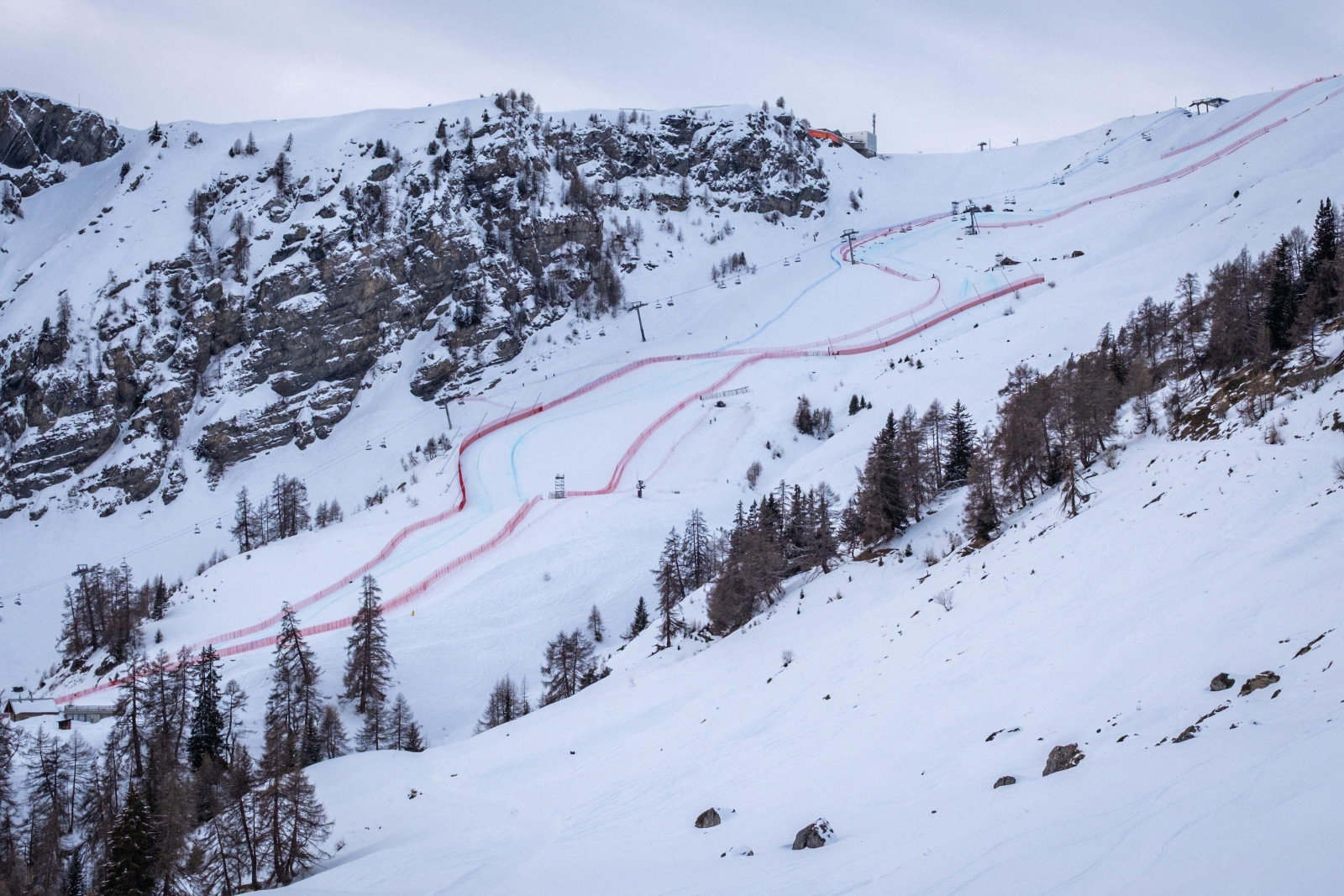
2027 begins in Kranjska Gora for the men (2–3 January). Flachau gives the women a giant slalom and slalom double under lights (4–5 January), then Val di Fassa hosts the speed events. Next comes the trilogy that defines the men’s tour: Adelboden (9–10 January), Wengen (15–17) and Kitzbühel (22–24), the three venues that have been part of the World Cup since it began in 1967. The women move on to Cortina (15–17 January), Kronplatz and then Jasná, back on the schedule. Schladming, Kranjska Gora for the women and the Chamonix slalom (30 January) serve as the final dress rehearsal before the World Championships.
 © DPA - Alamy
February: Crans-Montana, then speed
From 1 to 14 February, the World Championships return to Valais, 40 years after the 1987 edition. The men will race the downhill on the Piste Nationale, the women on the Mont Lachaux. Afterwards, the calendar is mostly about speed. Garmisch-Partenkirchen hosts the men (20–21 February), then the women for two downhills (27–28 February) moved from Lenzerheide, where the upper section of the course poses problems. Lenzerheide keeps two super-Gs (20–21 February), and Saalbach welcomes back a men’s downhill and super-G.
March: from the Arctic Circle to Idaho
Kvitfjell hosts the men (6–7 March) and Soldeu the women (6–7 March), replacing Åre on the women’s tour; Åre gets the men’s technical races instead (13–14 March). For the women, Narvik, north of the Arctic Circle, is due to make its World Cup debut two years before hosting the 2029 World Championships. It is the only stop still awaiting confirmation: infrastructure work is ongoing and travel on to the United States has yet to be settled. The Norwegian organisers are already looking further ahead, with ambitions to host the 2028 Finals. The season closes in Sun Valley, America’s pioneering ski resort, with the Finals from 20 to 25 March.
Dates, start times, vertical drops and course data for every stop. Open the 2027 season calendar
Not in the start gate
The most awaited decision came in August: Lara Gut-Behrami is retiring. The Swiss from Ticino leaves with two overall titles, seven discipline globes, 48 wins and 101 podiums from 395 starts. She wants to protect a body that, despite the crashes, is free of chronic pain.
On the men’s side, Alexis Pinturault closed out in Hafjell a career of 34 wins and 77 podiums, including the 2021 overall title, which makes him the most successful French skier in history. He is joined by Adrien Théaux, retiring at 41, and Dave Ryding, the only British World Cup winner (Kitzbühel, 2022). American speed veteran Jared Goldberg, second in Val Gardena in 2024, also steps away. Ilka Štuhec, a two-time world downhill champion, said goodbye in Kvitfjell.
Lindsey Vonn will not be at the start either: a comeback is not possible before the 2028 season, and she has not made a decision. Two cases remain open. Federica Brignone had surgery in late August to remove the last plates and screws from her left leg. Sölden remains her most ambitious target, and Crans-Montana, where she has won six times, the real goal of her winter. She has yet to decide; "If I show up, it will probably be my last season," she has said. Marcel Hirscher, for his part, was back on skis in September. FIS is due to rule on his status at its autumn meetings in Geneva, from 28 September to 3 October. Its race director, Markus Waldner, has already said permission would "certainly" be granted. Since then, on 1 October, the FIS Council has set his bib: number 31 (read on).
What’s at stake
Among the women, the Shiffrin–Aicher duel is the common thread. The German makes no secret of targeting the overall title, and a more balanced calendar should suit a skier capable of scoring in every discipline. Camille Rast and Sofia Goggia, third and fourth overall, will have their say too, even though the Italian’s preparation was cut short in mid-September by a health problem at the team’s camp in Argentina.
Among the men, a sixth overall title would make Odermatt the second most successful skier in the history of the standings, behind only Marcel Hirscher’s eight. He will have to contend with von Allmen in speed and the Pinheiro Braathen–Meillard pairing in the technical events.
Finally, Crans-Montana splits the winter in two. With three weeks in North America in December and Finals in Idaho, managing travel will matter as much as form on the day. See you on the Rettenbach on 24 October.
First published on 27 September 2026, revised on 8 October 2026: standfirst added, FIS decision on Marcel Hirscher, layout updated.