
Kittilä, Finland • FIS World Cup Slalom Women & Men • November 15-16, 2025
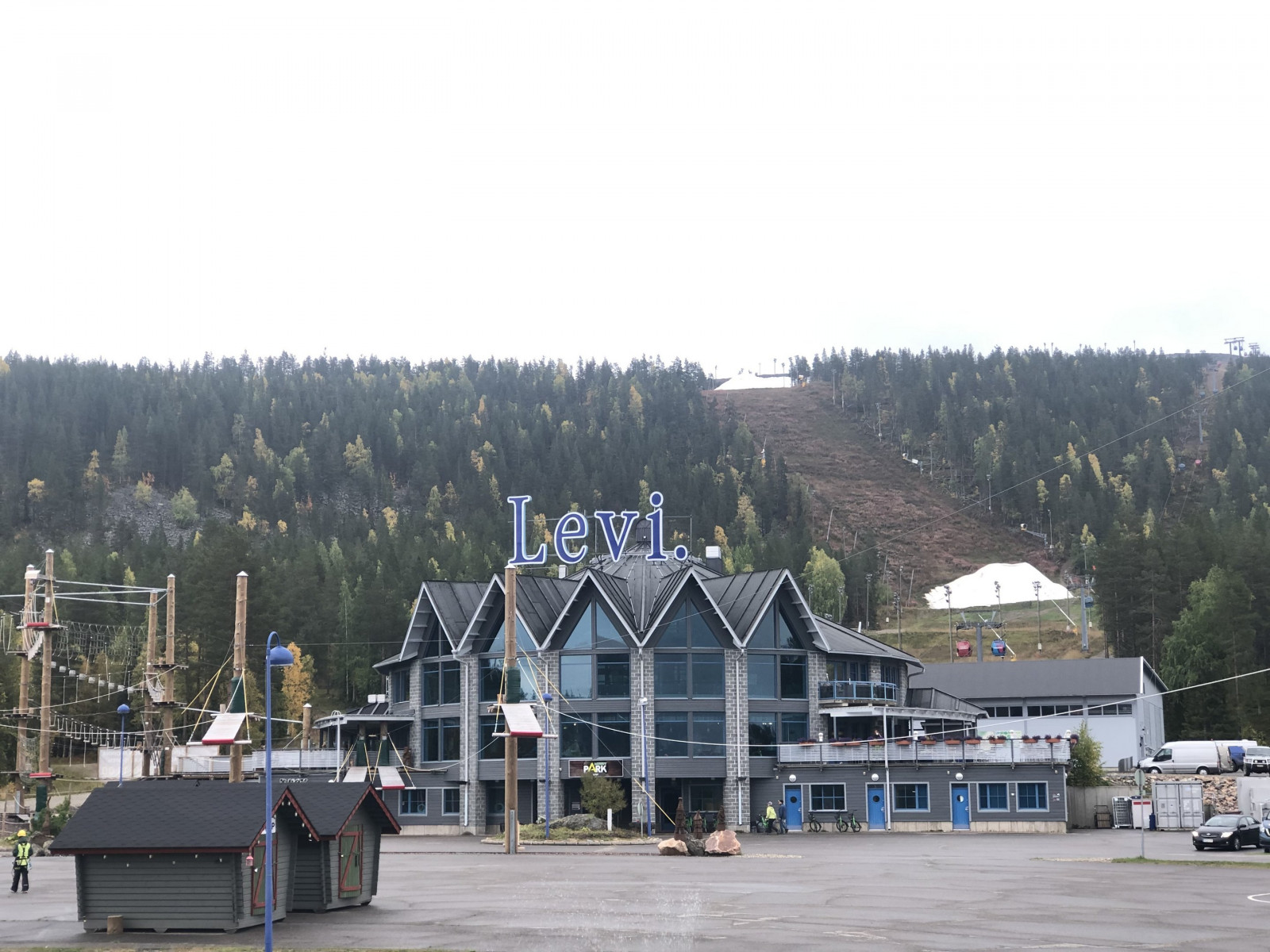
KITTILÄ, Finland — On a gray Tuesday evening in early November, the thermometer at Kittilä Airport reads 1°C. Mist shrouds the lower reaches of Levi Black slope, where LED floodlights cast ghostly halos through the humidity. Eleven days from now, these same slopes will host the season-opening World Cup slaloms—the first technical races of the Olympic year. But right now, conditions are anything but ideal.
Yet in the operations room at Levi Ski Resort, nobody's particularly worried. Because here, 170 kilometers north of the Arctic Circle, science has learned to trump weather.
Engineering Winter
The confidence stems from a decade of pioneering work that began, paradoxically, with failure. After several warm autumns and race cancellations in the mid-2010s, Levi Ski Resort made a radical decision: weather would no longer dictate the schedule. What emerged is now the world's most advanced snow storage system—a marriage of Finnish engineering pragmatism and climate adaptation necessity.
The technology, developed with Finnish firms Finnfoam and Snow Secure, centers on exceptional insulation. Each spring, snow is bulldozed into massive piles, then covered with 70-millimeter-thick extruded polystyrene blocks—the same material used in Finnish construction. These four-meter blocks, linked accordion-style, unfold to 18 meters and cover more than 70 square meters each. Atop them: white geotextile that, when moistened, aids cooling through evaporative heat loss.
The results are striking. Where traditional storage methods lose 30 to 50 percent of snow mass over summer, the Finnish technology caps losses at 5 to 10 percent. Last year, nearly 300,000 cubic meters of snow were preserved—enough to open slopes in early October, weeks before natural snowfall.
"The guaranteed snow conditions at Levi are, relative to the time of year, among the only places where you can access frozen man-made snow," explains Petri Tuomikoski, race director and former national team coach. "That condition is the closest to race conditions anywhere. Although this autumn has been quite warm, we've managed to offer good training conditions throughout."
Even now, with above-freezing temperatures and drizzle, international teams—Norway leading the way—are already training on the Glacier. The stored snow, compacted and hardened over summer, offers a "race slope" surface: the firm, reactive texture that racers crave.
The Arsenal: 300 Automated Snow Guns
But snow farming is just half the equation. Levi operates more than 300 fully automated snow guns, remotely controlled via a centralized management system. Among the most advanced on the World Cup circuit, they fire only when conditions optimize water and energy use.
Hannu Levinheimo, in charge of snowmaking since 1985, has watched the evolution unfold. "When I started, we had four manual snow guns," he recalls. "Today, with weather automation and remote control, we produce significantly more snow with the same water and energy. We can react instantly to wind direction changes and temperature variations. Our automated guns operate only when conditions are optimal in each specific zone."
Water comes from the Ounasjoki River five kilometers away, via underground pipelines. The system can fire up the moment temperatures drop below zero—which should happen sustainably starting this Thursday. Levi's crews will then have ten days to finalize Levi Black, layering fresh snow onto the stored base.
Levi Black: Anatomy of Exception
The slope that will host the Olympic season's opening slaloms carries unique characteristics. With a finish at just 258 meters above sea level, Levi Black holds the record for lowest finish elevation on the women's World Cup circuit—and ranks second overall, behind only Norway's Olympiabakken at Kvitfjell.
What the course lacks in altitude, it compensates with severity: 52 percent maximum pitch, 31 percent average gradient. This demanding geometry, combined with Arctic November temperatures, produces snow that's hard, fast, and technical—exactly what the world's best slalom skiers want for their season opener.
Then there's the darkness. In mid-November, the sun rises at 9:37 AM and sets at 2:33 PM, offering less than five hours of natural light. Both slalom runs (11 AM and 2 PM) unfold in twilight, requiring exceptional artificial lighting. Levi has invested in latest-generation LED systems that reproduce daylight color while dramatically reducing energy consumption. These floodlights, coupled with real-time adjustment by control teams, deliver optimal visibility for athletes and TV cameras alike.
Olympic Training Center: Institutional Recognition
In January 2025, Levi crossed a major institutional threshold, earning official Olympic Training Center status. The recognition, fruit of a project launched in spring 2021 by Levi Ski Resort and Levi Snow Sport Academy in collaboration with the Finnish Ski Association, Ski Sport Finland, and the Finnish Olympic Committee, places the resort at the heart of the national network of sports excellence centers.
But Levi distinguishes itself through specialization. Unlike other Finnish Olympic centers, its core focus is slope disciplines: alpine skiing, freestyle, freeski, and snowboarding. The infrastructure—Levi Glacier, Alpine Training Park, and Levi West—can simultaneously accommodate up to 150 international teams.
The numbers are dizzying. "This year, the fell is hosting more than 150 teams, about 1,800 people total. That's a bit more than last year," says Jukka Leino, coordinator of the Levi Olympic Training Center. Among the nations present: United States, Czech Republic, Sweden, Norway, Slovakia, Switzerland, Germany, Australia, Netherlands, Austria... even Argentina. In freestyle, Olympic champions like Jakara Anthony (AUS) and Walter Wallberg (SWE) come to hone their technique on South Park and Fun Park modules.
"It demands significant coordination in terms of training slots and, of course, maintaining quality conditions," Leino continues. His team juggles daily requests from different federations, optimizing slope use to maximize everyone's training hours. Levi's compact village, short distances between lodging and lifts, and proximity to Kittilä Airport (15 minutes) constitute decisive logistical advantages.
Club5 Classic: Joining the Elite
International recognition strengthened further in 2025 with Levi World Cup's admission to Club5 Classic, the association of historic World Cup organizers. Founded in 1988 by five legendary downhill venues—Kitzbühel, Wengen, Garmisch, Gröden, and Val d'Isère—who united under a common brand, Club5 works in close collaboration with FIS.
Levi joins the 2025 class alongside Val di Fassa, Kronplatz, Bormio, and Courchevel. For a resort located beyond the Arctic Circle in a country without Alpine mountains, admission to the "classics" club represents consecration: recognition of reliability, organizational excellence, and the capacity to deliver optimal race conditions year after year.
Mastering the Future
As temperatures begin their descent toward expected negative values, Levi's teams refine final details. The 500 volunteers who bring the event to life—proof of community commitment around the World Cup—prepare to welcome the alpine skiing world. Piles of stored snow await spreading onto zones requiring reinforcement. Snow guns stand ready to blast crystalline mist starting Thursday.
Petri Tuomikoski and Jukka Leino, each in their domain, oversee operations with the serenity of those who've made climate adaptation an exact science. In a global warming context that destabilizes many early-season resorts, Levi has transformed constraint into expertise. Snow farming, initially developed as an emergency solution after 2015 cancellations, has become a model studied and replicated in the Alps—from Courchevel to Kitzbühel.
"Levi isn't just a competition venue, it's become a laboratory for snow sports innovation," summarizes an FIS official. "Their capacity to guarantee optimal conditions in November, despite sometimes marginal temperatures, makes them a reliable partner for launching the season. And in the current Olympic context, that reliability is priceless."
On November 15, when the first women launch down Levi Black under LED floodlights, few spectators will measure the scale of technical infrastructure that made the moment possible. But for Finnish organizers, it will be the reward for a decade of research, investment, and innovation. Levi may not have mountains, but it possesses something more precious in modern skiing: mastery of the future.